Please note: this article was published on 24 February 2026 for the 2025/26 tax year. Tax rates and rules may have changed since, so please contact us for up-to-date advice.
Once January is over, things usually go quiet for a moment.
The deadlines have passed.
The pressure eases.
And business owners finally have a bit of breathing space again.
But February has a habit of bringing up a familiar set of questions, ones we hear every year, often with the same underlying theme:
“I wish I’d asked this sooner.”
Here are some of the most common ones 👇
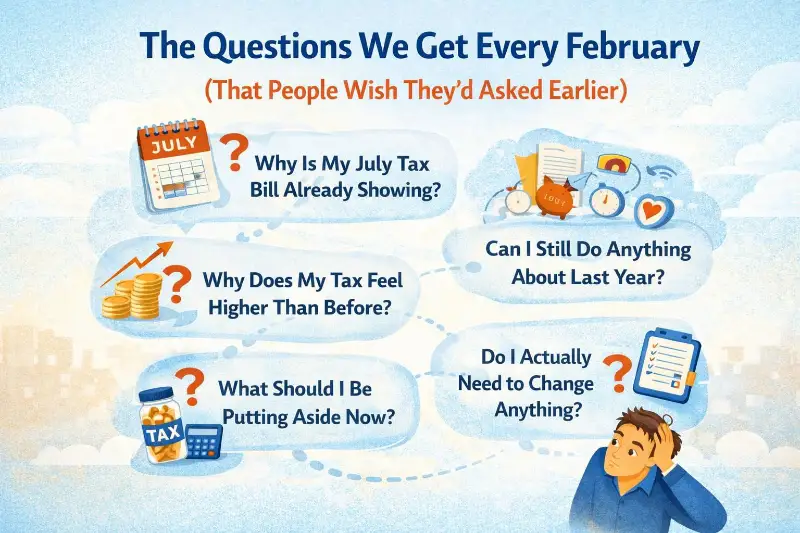
❓ “Why Is My July Tax Bill Already Showing?”
This catches a lot of people off guard.
After filing in January, HMRC statements often show:
- a payment due in July
- sometimes alongside figures for the following January
This is usually down to payments on account, rather than a new or unexpected tax charge.
Nothing has gone wrong, but without context, it can feel unsettling to see future liabilities appear so quickly after January has just been dealt with.
❓ “Can I Still Do Anything About Last Year?”
This is a very common February question.
While January closes off some planning opportunities, there are still areas where adjustments can be made, particularly around:
- timing of certain reliefs
- pension contributions (depending on circumstances)
- how figures are interpreted and understood
The key is knowing what can still be influenced and what can’t, rather than assuming everything is set in stone.
❓ “Why Does My Tax Feel Higher Than Before?”
Often, this isn’t because tax rates have suddenly jumped.
It’s usually linked to:
- higher profits
- reduced allowances
- payments on account starting or increasing
- changes in income mix
February is often when people start to compare this year’s position to last year’s, and realise that things don’t always move in straight lines.
❓ “What Should I Be Putting Aside Now?”
Once the January bill has been paid, many business owners want to avoid the same pressure next time.
February is when questions start to shift towards:
- how much to set aside for tax
- how often to review it
- whether current drawings are sustainable
These aren’t urgent questions, but they’re important ones, and they’re far easier to deal with early.
❓ “Do I Actually Need to Change Anything?”
Sometimes the answer is no.
But February is often the point where it becomes clear whether:
- systems held up under pressure
- figures were available when needed
- decisions were rushed unnecessarily
Small tweaks made now can make next January feel very different, without requiring major overhauls.
🌱 Why February Is When the Better Questions Appear
January is about meeting deadlines.
February is about understanding what those deadlines revealed.
The questions we hear this month tend to be calmer, more thoughtful, and more useful, because they’re asked without the pressure of an immediate cutoff.
That’s often where the most meaningful improvements begin.
💡 Final Thoughts
If January raised questions you didn’t quite have time to ask, February is the moment to revisit them properly.
Most tax and finance issues aren’t about doing something wrong, they’re about not having the right information at the right time.
At Llewellyns, we believe the best outcomes come from asking the right questions early, not rushing to fix things at the last minute.
Talk to Llewellyns
Every situation is different. If you'd like advice on how this affects you or your business, get in touch with our Cardiff or Tonypandy office.