Please note: this article was published on 24 March 2026 for the 2025/26 tax year. Tax rates and rules may have changed since, so please contact us for up-to-date advice.

If you’re a subcontractor in the construction industry, the Construction Industry Scheme (CIS) isn’t optional.
It affects your cashflow.
It affects your tax bill.
And if it’s handled incorrectly, it can create unnecessary penalties.
Every month, there are things that must be done properly.
Here’s what subcontractors need to get right.
What Is CIS? 🔎
The Construction Industry Scheme (CIS) is HMRC’s system for collecting tax from subcontractors in the construction sector.
Under CIS:
- Contractors deduct tax at source from subcontractor payments
- Deductions are usually 20% (or 30% if not properly registered)
- The contractor pays this directly to HMRC
These deductions act as advance payments towards your tax and National Insurance.
But that doesn’t mean your responsibilities end there.
1️⃣ Make Sure You’re Properly Registered ✅
If you’re not registered for CIS, contractors will deduct 30% instead of 20%.
That’s a major cashflow hit.
Before taking on work:
- Ensure you are registered as a subcontractor
- Confirm your UTR is correct
- Check that contractors have verified you with HMRC
Incorrect registration is one of the most common, and avoidable problems we see.
2️⃣ Check Your Deduction Statements Every Month 📄
Contractors must provide a CIS deduction statement showing:
- Gross amount of work
- Materials element
- Amount deducted
- Contractor details
You should check:
- Are deductions calculated correctly?
- Has materials been excluded where appropriate?
- Is the percentage correct (20% vs 30%)?
Errors do happen.
If you don’t check monthly, you may not notice until year-end, when it’s much harder to correct.
3️⃣ Keep Proper Records 📊
CIS isn’t just about deductions.
You must maintain:
- Accurate income records
- Expense records
- Materials breakdown
- Deduction statements
If you’re self-employed, this feeds directly into your Self Assessment.
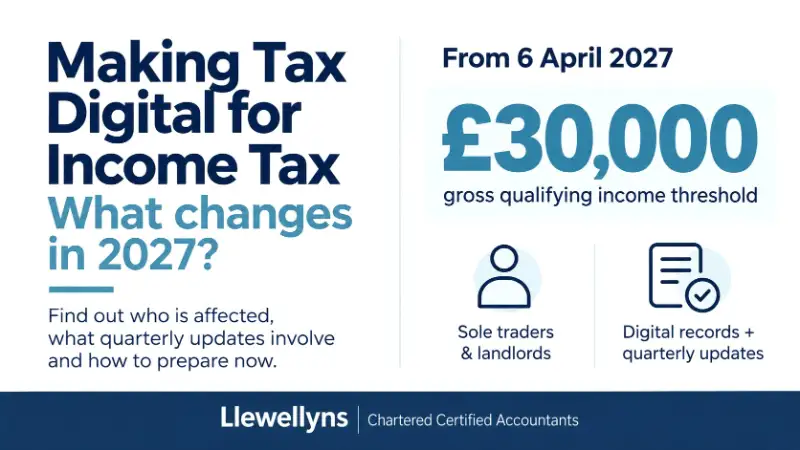
With Making Tax Digital approaching for many sole traders, digital record keeping is becoming increasingly important.
Paper folders are no longer sufficient long term.
4️⃣ Understand How CIS Affects Your Tax Bill 💷
CIS deductions are not your final tax bill.
They are advance payments.
At year-end:
- Your total profit is calculated
- Income Tax and National Insurance are calculated
- CIS suffered is offset
If deductions exceed your liability, you may receive a refund.
If your records are incomplete, that refund can be delayed.
5️⃣ Watch Your Cashflow ⚠️
CIS can create confusion around available cash.
You may invoice £5,000 — but only receive £4,000 after deductions.
Without proper planning, this can cause strain, especially where:
- VAT is also payable
- Materials are high
- Fuel and equipment costs fluctuate
Knowing your net position monthly avoids surprises.
6️⃣ Gross Payment Status – Is It Worth It? 🏢
Some subcontractors qualify for Gross Payment Status (GPS), meaning:
- No deductions are made at source
- You receive payments in full
But this comes with strict compliance conditions:
- Timely tax returns
- No late payments
- Clean compliance record
Losing gross status can significantly affect cashflow.
It must be managed carefully.
7️⃣ Monthly Responsibilities for Contractors 🗓️
If you operate as a contractor as well as a subcontractor, you have additional obligations:
- Verify subcontractors
- Deduct correct percentages
- File monthly CIS returns
- Pay deductions to HMRC by the 22nd of each month
Late returns can trigger automatic penalties, even if no tax is due.
Common CIS Mistakes We See 🚫
- Not registering properly
- Ignoring deduction statements
- Poor bookkeeping
- Assuming deductions equal final tax
- Missing monthly contractor returns
- Mixing personal and business accounts
Most penalties are preventable.
Why CIS Accuracy Matters More Than Ever 📌
HMRC continues to focus on compliance in the construction sector.
CIS errors can trigger:
- Penalties
- Compliance checks
- Cashflow disruption
- Delayed refunds
Handled properly, CIS is manageable.
Handled poorly, it becomes stressful.
Final Thought
CIS isn’t complicated, but it is procedural.
Monthly accuracy matters.
If you’re unsure whether your deductions are correct, or whether your CIS records are compliant, it’s better to check now than fix problems later.
At Llewellyns, we work with subcontractors and contractors across South Wales to ensure CIS is handled correctly, every month.
If you’d like your CIS position reviewed, get in touch.
Talk to Llewellyns
Every situation is different. If you'd like advice on how this affects you or your business, get in touch with our Cardiff or Tonypandy office.